
Home / What is castoreum
Perfumer's guide
What is castoreum? A perfumer's guide
Castoreum is one of the classic animal notes of perfumery. This guide explains where it comes from, how it smells and how perfumers work with it.
Where castoreum comes from
Castoreum is the dried secretion of the castor sacs of the beaver. Our castoreum comes from the North American beaver, Castor canadensis, harvested in Canada. Beavers use the secretion to mark their territory. After harvest, the paired sacs are dried and cured until they are hard and dark, which is the form traded as raw castoreum.
Castoreum is often described as coming from "anal glands". That is a common mistake: it comes from the castor sacs, which are separate organs.
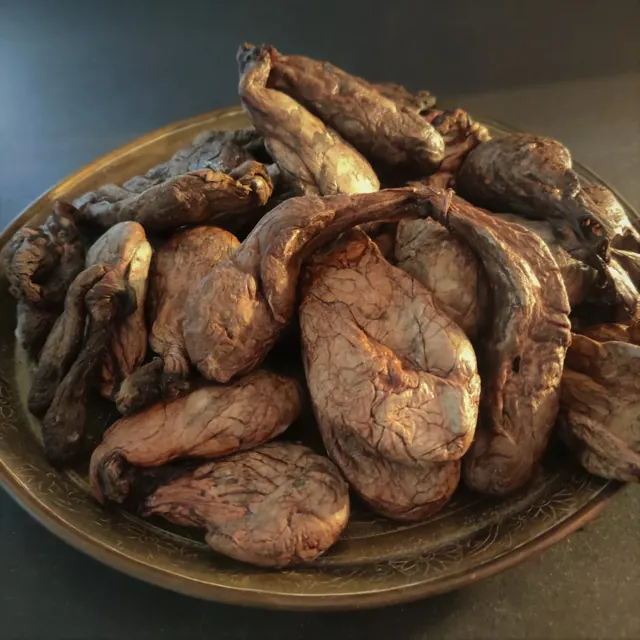
How castoreum smells
Once dried and aged, castoreum has a warm, leathery and animalic smell. Perfumers also describe sweet, smoky facets reminiscent of birch tar, with hints of vanilla and fruit. Raw castoreum can smell sharp, but it softens and becomes rounder as a tincture ages.
How perfumers use it
Castoreum has been used in perfumery for centuries. It is a traditional part of leather accords, chypres, ambers and fougères. In small doses it adds depth, warmth and a natural, skin-like quality, and helps a fragrance last longer. It is also valued in traditional attars across the Middle East and South Asia.
It is usually worked with in one of three forms:
- Tincture. Dried castoreum is cut or ground and macerated in perfumer's alcohol, then aged for months before it is filtered. Ageing rounds out the sharper notes.
- Resinoid. Made by extracting the dried material with a solvent, then removing the solvent to leave a thick, concentrated material.
- Absolute. A further-refined extract that is easier to blend into fine fragrance.
Each perfumer has their own method and strength for a tincture. If you are making one for the first time, start with a small test batch. Smaller or broken pods (Grade 3) work well for extraction, while matched pairs (Grade 1) are often chosen for tinctures. See the grade guide.
Notes that pair well with castoreum
Castoreum blends naturally with birch tar and other leather notes, labdanum, vanilla, tonka, iris, tobacco, woods and resins. In a floral or fruity composition, a trace can add warmth without reading as animalic.
Castoreum is not castor oil
The names are similar, but the materials are unrelated. Castor oil is a vegetable oil pressed from the seeds of the castor plant (Ricinus communis). Castoreum comes from the beaver and is used for its scent.
How to store castoreum
Keep dried castoreum in a cool, dry, dark place in a sealed container, away from strong odours. Well-dried pods keep for a long time, and many perfumers believe castoreum improves with age.
Questions
Is castoreum the same as castor oil?
No. Castor oil comes from the seeds of the castor plant. Castoreum is the dried secretion of the beaver's castor sacs and is used in perfumery for its scent.
What does castoreum smell like?
Warm, leathery and animalic, with sweet, smoky birch-tar and vanilla facets that soften as a tincture ages.
Which castoreum grade should I use for a tincture?
Grade 1 or Grade 2 pods are usually chosen for tinctures, and Grade 3 for absolutes and extraction.